

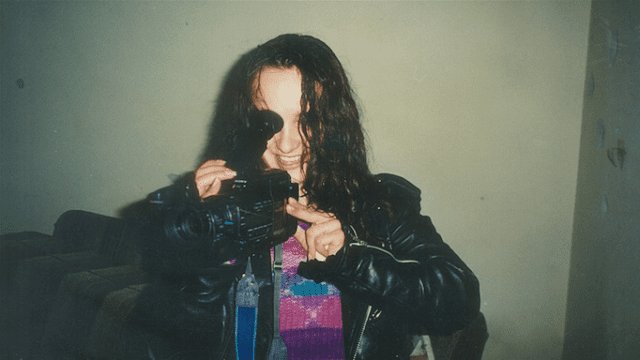
When Lidija Zelovic was growing up in Sarajevo, she decided at one stage to become a vegetarian. This was a radical decision for someone living in the Balkans where everyone eats meat all the time.
“Randomly, some things happen in life,” the director, who has been based in Amsterdam for many years (and whose new feature Home Game screens in competition in IDFA), reflects on why her vegetarianism eventually meant so much to her.
As she points out, the years passed and war came. “I was 21 when war started – and 22 when I left for the Netherlands.”
Suddenly, people who had previously lived peacefully side by side had a new identity. Some were Serbs, some were Croatians and some were Muslims. Yugoslavia had ceased to exist. When she tried to define herself in this strange and combustible new world, Zelovic clung to being vegetarian. “At least I had something which was mine and that you couldn’t take away from me…I stuck to it.”
Zelovic wasn’t just a vegetarian. She was a filmmaker too. As a refugee building a new life in Amsterdam, she shot thousands of hours of footage – and she continues to record her life on camera today. Snippets from her huge personal archive feature in the new film.
“I have made two other personal films. I do keep on recycling the footage I have filmed over time.”
The new documentary has a very particular focus. Zelovic has grown to love the Netherlands, but she has witnessed an alarming lurch to the right in the country, which something she “has seen before back in Yugoslavia, she says. The documentary includes footage of political firebrand Pim Fortuyn and filmmaker Theo Van Gogh, who were both murdered. It chronicles the way that the Dutch political scene has increasingly come to resemble the powder keg in the Balkans she remembers from 30 years ago. There is an intolerance and xenophobia in the Netherlands that she simply doesn’t remember from when she first arrived in the country.
Zelovic has been filming for so long that, almost accidentally, she has chronicled these profound and dangerous changes in the society. “It’s my story but it is a film about the Netherlands,” she says. “I really had to find a way of telling the Dutch a story about themselves without them killing or hating me.”
Many have told the director that she is over-reacting and that her response to what is happening now in the Netherlands is coloured by her traumatic memories of the Balkans in the 90s.
“I want to believe them, that it is [my] trauma….,” she reflects. She adds, though, that the idea that the Yugoslavs or the Iraqis or the Syrians are “mad” but somehow the Dutch are sane is an illusion. “It can get anywhere,” she says of the paranoia and fear of the “other” that can distort even the most stable-seeming of societies.
The director has spent many years assembling thousands of hours of material. Her family are accustomed to her recording their lives constantly. (“They’ve so got used to it that they don’t mind it…they don’t blink.”) In the documentary, we see them eating, watching TV, doing DIY.
We also see a surprising amount of the filmmaker herself.
“For some other films, I would need footage of me. Then, someone else was filming me. Then I used that footage in this film as well. I combined footage from many different films and I put it in this one.”
Much of the material may have seemed banal but Zelovic knows she will always find moving and revealing moments. As time passes, footage which didn’t necessarily mean very much when it was first shot will take on a poignant new resonance because of what has changed in the intervening years.
The film, which has been picked up for distribution by Cinema Delicatessen who are expected it to release it in Dutch cinemas next year, has a voice-over in which the director describes herself in the third person. “I wanted to have this voice-over that knows more than ‘Lidija’ knew at the time,” she explains why she didn’t use first person narration. “There is also this part of yourself with all immigrants where you develop a completely new persona when you leave home. And we all change in the course of time. The world around us makes us who we are now.”
Structuring the film was a challenge. The director isn’t just using her own personal footage but is drawing from archive material of everything from Sarajevo in the 90s to rival fans fighting in football stadiums.
Zelovic acknowledges that she was nervous about how the documentary wouldl be received at its premiere in one of Amsterdam’s most prestigious venues, the Carré Theatre. She is quite prepared for viewers to dislike the movie, but she hopes that, at the very least, they will discuss it. Far worse, she adds, would be for the audience to be indifferent.
“The Netherlands is really, really important in my life. I am living here. My son is here. We are going to stay here. I find it really, really important that they [the Dutch] hear me…this is a really, really dangerous time. You have no idea how [easily] it can get out of control.”
She adds that she feels very “connected to Amsterdam; it is really home to me. I really, really like the Netherlands – and you know how I know I really care for the Netherlands is that I am so upset with it [the country], I am so angry!”
“I never knew how Yugoslav I was until Yugoslavia disappeared. I never knew how important Sarajevo was to me until I lost it…but I have that knowledge [now]. I am really scared of losing the Netherlands!”
This is an extended version of a feature article written for SEE NL, published by Eye Filmmuseum and the Netherlands Film Fund.





