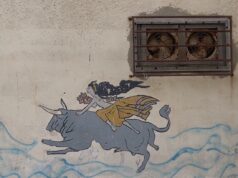
The Clotilda was the last ship to carry African captives to the US. Its shameful journey was made in 1860 although the act prohibiting the importation of slaves had been passed over 50 years before, in 1808. Descendants of the 110 people seized from their homeland in what is now Benin still live in Alabama. (The ship itself was scuttled and burned after its arrival in the US, primarily because its owner wanted to conceal his criminality.)
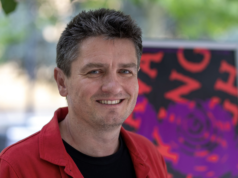
Margaret Brown’s new documentary Descendant looks at the legacy of suffering and injustice left by The Clotilda. Brown and co-producer, co-writer and folklorist, Dr. Kern Jackson, director of the African American Studies programme at the University of South Alabama, spoke to Business Doc Europe about their film during the recent IDFA (Amsterdam).
The Participant-backed doc is an Oscar hopeful having already won a Special Jury Prize at the Sundance Festival. Netflix and Higher Ground (the company run by President Barack Obama and Michelle Obama) took worldwide rights immediately after the Sundance success.
Brown herself is from Mobile, Alabama. Descendant picks up on her earlier documentary, The Order Of Myths (2008), about two Mardi Gras Queens from Mobile, one Black and one white who both had connections to The Clotilda. Mobile has two Mardi Gras associations, separated racially. The white Queen was Helen Meaher, a direct descendant of Timothy Meaher, the man who had brought The Clotida to the US. The Black Queen, Stephanie Lucas, was descended from one of the slaves on the ship.
“My mother said to me, do you know that family [the Meahers] is the family that brought the last slave ship,” Brown remembers how she first made the link.
While making The Order Of Myths, Brown had first met some of the residents of Africatown, a Mobile community founded by the Africans who had been taken to the US aboard the ship.
Archaeologists and historians had long been searching for the remains of The Clotilda. Five years ago, it looked as if the wreckage had finally been found. “There was a ship that was found which actually was not The Clotilda. The Africatown community calls it the ‘Notilda’ because it wasn’t The Clotilda,” the director remembers.
Even though this turned out to be the wrong ship, Brown was being asked continually if she might return to Mobile to make another film. “I didn’t really think I was going to make a sequel to [the] documentary but then, you know, people kept writing me saying ‘this community is really interesting.’”
By chance, Brown had been having breakfast in LA with producer Louis Black, the co-founder of SXSW. She told him about all the messages she had been receiving saying she should go back to Mobile. “He said ‘you should go back,” and he wrote me a cheque and he put me on a plane.”
Back in Alabama, Brown began working on what would become Descendant. Her first call was to Kern Jackson, who had been involved in the earlier documentary. Jackson was renowned for his knowledge of local folklore. He had carried out extensive ethnographic research work on African-American neighbourhoods. Africatown was one of the neighbourhoods he studied.
“The folklorist Zora Neale Hurston had already been in Africatown, working with one of the people from the last slave ship. She had submitted articles and had even done a fictive piece about it,” Jackson says of the legendary US author and anthropologist whose ground-breaking book ‘Barracoon: The Story of the Last Black Cargo’, written in 1931, was only finally published in 2018, 58 years after her death in 1960. He describes Hurston as “the lead voice of southern American anthropology.”
Writer Jackson had “followed Hurston’s trail.” Like her, he had interviewed the residents of Africatown. “I knew that going in, but when I was studying Africatown, the people didn’t really know that story themselves,” Jackson points out that the local community had little knowledge of the research that Hurston had done. She had met and interviewed Cudjoe Lewis, the last known survivor of
The Clotilda.
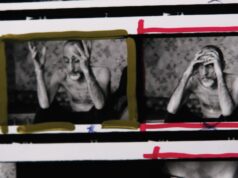
Over 90 years ago, Hurston had also shot some remarkable footage of Lewis and his community. “Some of it was readily available and you could go on YouTube and see it but other parts were not. The part where Cudjoe was talking right at the camera – we didn’t even know that existed. It was one of those chill bumps moments: the last known living slave, there was footage of him that Zora Neale Hurston had filmed,” Brown recalls. “It was just wild.”
The Meaher family has remained very wary about the documentary. The family made a statement recently calling their ancestor’s actions in bringing the illegal slave ship to Alabama “evil and unforgivable,” but showed no willingness to engage with Brown or her team. Not even Helen Meaher was prepared to talk on the record despite her involvement in Brown’s earlier film.
The director is quick to point out that her documentary is primarily about the community, not about the ship (“that’s just one thread.’). The remains of The Clotilda were eventually found in the Mobile River in 2019. The discovery promises to create a huge tourism bonanza. The question now is who will benefit. It will be very ironic if the same white families behind the illegal slave smuggling are able to profit from their ancestors’ misdeeds.
“The people in power in Mobile are mostly white and Republican. They’re waiting to see where the chips fall with the movie and how much attention we get,” Brown says of the establishment forces looking to protect their own interests. “But also I think there is an opportunity for the city really to embrace this story and augment the voices that are in the community.”
Jackson accepts that the white establishment won’t welcome the film. “Typically what happens is that when a story like this rises up, those in power just wait for it to go away and resume business as usual.”
However, Brown points to audiences’ “emotional connection” to the story.
Will those living in Africatown today ever receive reparations for the suffering inflicted on their ancestors? This is a vexed and complex question. When the film was screened in Mobile earlier in the autumn, a conversation on the subject began the moment the film ended.
“I think there’s a way to frame this. Justice could be, like, environmental remuneration in the neighbourhood,” Brown suggests.
Jackson adds that reparations could mean something as basic in the short term as “having street lights in the neighbourhood. They’ve got them in other neighbourhoods, so why not have them in this neighbourhood?”
The long term question is whether descendants will be able to tap into the “generational wealth” of the families who benefitted from their ancestors’ enslavement.
With the Obamas and Netflix behind it, Descendant is building up momentum in this year’s awards race. “They’re helping amplify the message and get the word out,” Brown says of the Obamas (who saw the film at Virtual Sundance and contacted the filmmakers two hours after the screening ended).
Brown acknowledges that as a white filmmaker, there were times she wasn’t sure that “this is my story to tell.” She made sure that she involved “the community” in many of the key decisions regarding the shape of the documentary. The film was made over a period of almost five years.
“As a community, what we said to her was ‘do your thing,’” Jackson says of how the people of Africatown reacted to Brown making the film. She had their full backing.
“The other subtext that people might not know in the UK is that I’ve been making films in this community for years,” Brown adds. When she showed up in Africatown, people were already aware of her earlier work.
Descendant may deal with the search for The Clotilda but it also exposes the racism that the inhabitants of Africatown continue to endure in the present day.
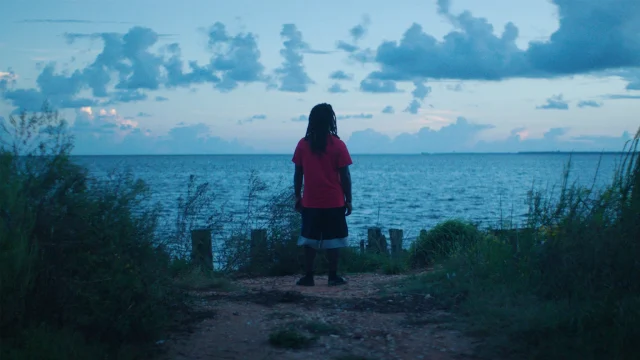
“It was just so crazy this doubling that happens in the movie with the footage that Kern shot and with the footage that Zora Neale Hurston shot, and the fact that we filmed the descendants reading the words of their ancestors in the space where you still see what happened 160 years ago,” Brown reflects. “The story just cannot be kept down!”