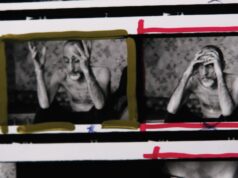
Still: courtesy of Netflix
Justice is at last being served for Martha Mitchell, the woman whose role in exposing the Watergate scandal has been ignored for too long.
When Mitchell died in 1976, there may have been a wreath at her funeral saying “Martha was right,” but she had been largely written out of history. She was separated from her husband, John Mitchell, the former US Attorney General and one of President Richard Nixon’s right-hand men. Her celebrity had faded. Her reputation was in tatters. She was broke. Her reward for “speaking truth to power” was to be dismissed in public as a neurotic and delusional attention-seeker.
Now, though, Mitchell is right back in the limelight. The Martha Mitchell Effect, a new Netflix documentary directed by Anne Alvergue and co-directed by Debra McClutchy, is in contention for a Best Documentary short Oscar following its premiere in Sundance last January. Mitchell has also recently been played by Julia Roberts in Gaslit, a limited series made for Starz.
“She [Mitchell] was definitely a hidden figure. She has essentially been erased from Watergate history,” suggests Alvergue.
She and McClutchy discovered Martha’s story through a podcast. The filmmakers felt a little embarrassed that they didn’t know more about her.
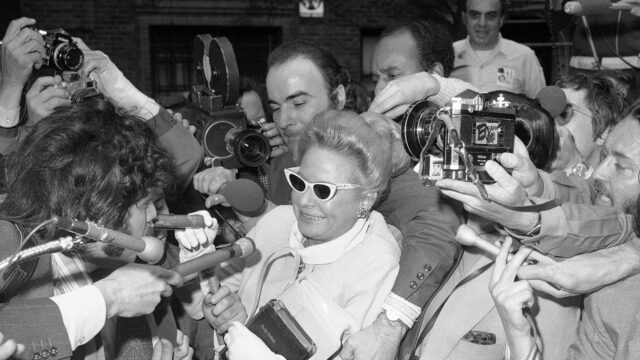
In the late 1960s, before she fell foul of Richard Nixon, Martha was a colourful, outspoken figure who had become one of the Nixon administration’s most effective cheerleaders in the media. “She was incredibly popular, vivacious and charismatic,” Alvergue notes. Then came her fall from grace.
As they did a little more research, the filmmakers discovered they had stumbled on an astonishing case of a modern-day Cassandra being silenced and punished for her honesty.
“We realised there was this larger story about gaslighting and that she had made a bigger impression on the administration than she had ever been given credit for.”
Martha had realised before almost anyone else that a cover-up was going on in very high places after the Government-sanctioned break-in at the Democratic National Committee headquarters in the Watergate building in June 1972. Nixon wanted her silenced.
The filmmakers started work on the project in earnest in 2019. “It was one of those flying by the seats of your pants productions,” McClutchy remembers the battles to secure the archive material and arrange the relevant interviews. They brought on two “really awesome” producers, Beth Levison and Judith Mizrachy.
The directors tracked down a devastating interview in which Martha’s ex-husband, John Mitchell, is asked about going to jail for his role in the Watergate scandal. “It could have been a lot worse. They might have sentenced me to live with Martha Mitchell,” he made a horribly cheap joke at the expense of his ex-wife.
“It was such a striking comment when we first heard it,” Alvergue notes. “We knew it wasn’t just a film about Martha. It was a film about their relationship – and the dissolution of their relationship. In the very beginning, they [Martha and John] were quite in love and quite smitten with each other.”
Martha “really went to bat” for her husband, protecting him when she thought that Nixon was about to “throw him under the bus.” She eventually discovered, though, that he and Nixon had been conspiring against her. “We see this not only as a story of Martha within the Watergate scandal and gaslighting but as a larger love triangle – of Nixon and Martha vying for the attention of John Mitchell. In the end, John Mitchell chose Nixon over his own wife.”
The filmmakers were determined to tell Martha’s story “through her voice.” After all, when it comes to Watergate, the voices heard over the last 50 years have invariably been those of the men involved.
The documentary has a running time of 40 minutes. The directors acknowledge they “went back and forth” about making it feature length. “I think we reached a happy medium with 40 minutes…there were a variety of factors as to why we landed on that. Part of it was just the exorbitant archival cost. Also, at the time we were making it, nobody really knew about Martha. Obviously, we believe in her and she could certainly have carried a feature but the name recognition was certainly less than it is now.”
As the directors note, it isn’t just Martha who is missing from most accounts of Watergate. “The female journalists are written out of the story as well in a lot of ways,” McClutchy believes. “One thing about Watergate is that it is always told through All The President’s Men as a lens. Exhuming Martha was also a way for us to exhume these female reporters like [United Press International journalist] Helen Thomas and Winzola McLendon, who was not only a friend but was writing a biography of Martha.”
John Dean, Nixon’s White House Counsel and an insider, acknowledged to the directors that only belatedly did he realise how significant a figure Martha was in the whole Watergate story.
“But what’s most fascinating is how Martha has become a little bit of a household name again like she was in the 1970s,” Alvergue observes. Evidence of this is that even Bob Woodward and Carl Bernstein, the Washington Post reporters whose book ‘All The President’s Men’ was regarded as the definitive source on Watergate, now mention Martha regularly. “They have never talked about her!” Alvergue enthuses. “That is really exciting, that she has been exhumed in this way.”
Woodward and Bernstein “focused on the men.” All these years later, they now acknowledge that they “missed the boat” when it came to Martha Mitchell.
The Watergate saga represented a cleaning of the stables in Washington DC. In the post-Trump era, though, many would question whether American presidential politics is any less corrupt than in Nixon’s time. “Watergate was a watershed moment,” Alvergue says of a scandal which taught voters for the first time their leader could lie. “I feel there is a lot more cynicism now, a lot more scepticism.”
“[But] hopefully, there are still people who will call out truth to power, the Martha Mitchells of the world who expect accountability,” chimes in McClutchy.
Having completed The Martha Mitchell Effect, Alvergue, who describes herself as “an editor by day,” is back “cutting other people’s films.”(Her editing credits include such titles as Love, Gilda and Bully, Coward, Victim: The Story Of Roy Cohn).
McClutchy, meanwhile, describes the Martha Mitchell documentary as “career changing.” She was previously in distribution at Oscilloscope Laboratories. Now, she is making films rather than releasing them. “I am working in the archival space, doing archival research, and I am producing. I am having a lot of fun doing that,” she states.
The Martha Mitchell Effect was released globally on Netflix last June.