“An audacious shot on goal, both bold and delicate,” reads the slogan on the Panenka website. The Belgian company, founded in 2004, has taken its name from one of the most famous penalties in the history of football. During the UEFA Final in Belgrade in 1976, the Czech player Antonin Panenka hoodwinked the German keeper with a deceptively gentle dink down the middle. The keeper, who had dived to his left, could only look over his right shoulder as the ball went past him.
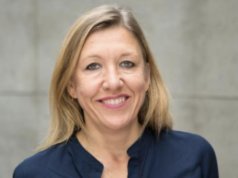
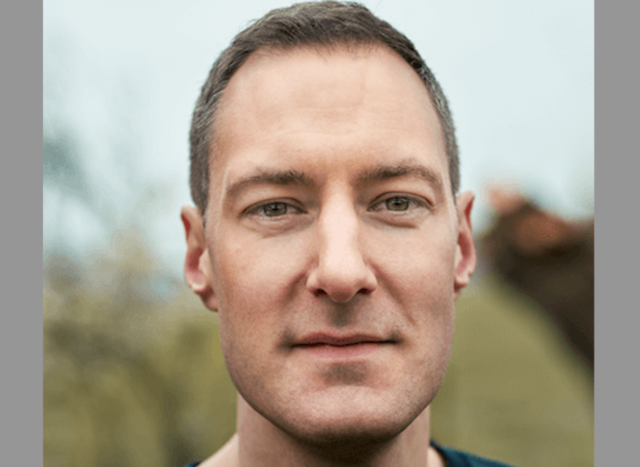
Representing Panenka at RE>CONNEXT is Kristoffel Mertens, a producer with an unusual skillset for someone in the documentary field. Thanks to his previous job working in the commercial/business arm of production outfit Caviar, Mertens knows the arcane world of Belgian tax shelter funding inside out. And because of earlier experience gained doing “contracting and hard sales” in the hotel business, he is also an expert negotiator.
One of the main projects with which Panenka will be trying to score with international partners at RE>CONNEXT is Mobutu, a documentary series about the Congolese dictator Joseph-Désiré Mobutu (1930-1997). This four-part historical portrait of the notorious despot is being made by Guillaume Graux and Joost Vandensande and is expected to be ready for 2023.
“We show a lot of archive material but we also do research on how he became so big as a dictator,” Mertens says of the series which will look at the connections between Mobutu and western leaders. It will also consider his life and career “in the current context of Black Lives Matter.”
Locations range from Mobutu’s palace in the middle of the jungle to Rabat in Morocco where he died in 1997, from his childhood haunts in Congo to the US.
The company is also working on high end fiction series, This Is Not A Murder Mystery, a 6-part whodunit which will be shot in English and French. Already backed by VRT, this has a hefty budget of €1.8 million an episode – and so Mertens will be looking for international partners to get the project off the ground.
Another new fiction series which is being made with VRT/Eén and with Netflix is Two Summers, a thriller about a group of friends who get back together 30 years after a tragic accident in which they were involved.
Mertens suggests the balance between fiction and documentary is “almost 50/50.” He and his colleagues are driven by the strength of the ideas, not the style or genre of the storytelling.
The Panenka team have fond memories of Connext. It was here that they first presented their six part documentary series The Vatican, winning the Best Pitch Award in 2019. That gave them “extra confidence” in the project and also enabled them to take it to Content London where Flanders Image provided them with free banner ads. The series then won a post-production award. This helped to give momentum to the project, which is directed by Kat Steppe and co-written by Rik Torfs and Jo Badisco. Covid may have slowed down production but there is already much awareness of the series far beyond Belgium.
It’s always the ambition for Panenka to give its documentary series the same dramatic sweep as any fictional drama. For example, their recent, award-winning 7-part series The Offensive, about political populism in Europe, received rave reviews when it premiered on Canvas last November. Critics praised the lively and accessible way in which it covered subject matter more often in the remit of very dry political talkshows.
The company tends to make documentary series rather than one-off documentary features. As Mertens says, that enables them to “really tell the story.” They can go into far more depth over several episodes than would be possible at feature length.
Pandemic lockdowns may have slowed down production at Panenka but there have been upsides too. “The main advantage is that we were able to develop more. People…were at home, not being able to produce anything [but] they also came up with great ideas. We also took the time to brainstorm and to accept all the ideas that came in,” Mertens reflects on a period in which the company was able to push forward with new ventures like Life In Colour, its five part docu-series on racism in Flanders that has now been made for VRT/Canvas and is due to broadcast later in October. “That is why we are very busy at the moment. We are now one year further [on] and going to the next steps with these projects.”