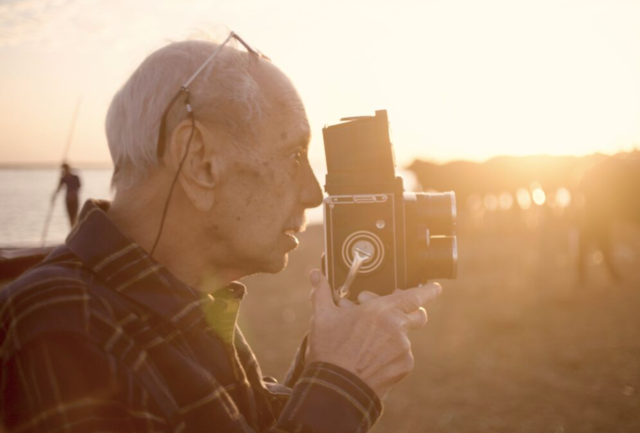
When he was growing up in Iraqi Kurdistan and was still at primary school, Sahim Omar Kalifa remembers seeing one of the photographs taken by Latif Al Ani, the “father of Iraqi photography” as he is often called. It was an image of a young, smiling girl with a milk bottle – a poignant, beautifully composed black and white image that reminds you of the work of Cartier-Bresson at his best.
Al Ani is a towering figure in the history of Iraqi culture. This gentle, patient man, now almost 90, has captured images of his country at many different moments during the upheavals of the 20th Century. He has seen kings toppled, colonial powers falter and dictators rise and fall. He has witnessed wars. He was even around for the rise of ISIS. He also chronicled moments when the country was thriving.
Based in Belgium since 2001, Kalifa says he welcomed the chance to work with one of his idols. Ask him why Al Ani’s pictures have such power and he suggests it was because the photographer was “not interested in politics.“ He didn’t take pictures of soldiers and fighting but instead always looked for “beauty,” wherever it might arise.
Kalifa first met the photographer in Beirut. He was impressed to discover how much Al Ani knew about Kurdish history. It helped, too, that Al Ani was a fan of Kalifa’s award-winning short Baghdad Messi (2012), featuring a one-legged kid obsessed with Lionel Messi.
“He is so diplomatic, so funny, so nice…and very kind,” the director says of his subject.
When they first discussed the documentary, Al Ani thought that it would entail him sitting on a chair, talking to the camera about all the pictures he had taken. “I said Latif, our ambitions are higher than that! We have bigger goals!” Khalif corrected him. This was to be a film for the cinema, not a piece of TV reportage. It was intended to have scale and grandeur.
In the documentary, Kalifa follows Al Ani as he travels through Iraq today. Much of the country is devastated. He is looking for the people and places he photographed in better times. Sometimes he is deeply shocked by what he encounters. For example, the veteran photographer always regarded Mosul as Iraq’s most beautiful city but when he visits it today, he can hardly recognise it, such was the scale of the destruction after ISIS attacked the city.
Al Ani has spent time with kings and presidents but he seems just as comfortable with the most humble Iraqi citizens. When he met passers-by who were suffering, Kalifa noticed, he’d always give them money.
Iraq’s Invisible Beauty, is featured as a work in progress at RE>CONNEXT. The project, which is produced by Jurgen Buedts at Las Belgas, is now nearing completion and is expected to surface at a festival soon.
Kalifa also has another new project close to completion, a dramatised feature film version of his Baghdad Messi documentary. This is being made by the Dutch Column Film and Flemish A-Team Productions (who also collaborated on Gangsta and U-235).
“We are really proud of what we have done. The entire film was shot in Iraq, in Kurdistan…it was very tough,” the director says
In his future career, Kalifa intends to continue making both dramas and documentaries. “If you do both, you learn a lot of things,” he reflects. “I will be very happy if, every four years, I make one documentary and one fiction [film].”
Kalifa already has one new fictional project in active development, Mesopotamia Cafe, on which he is set to work again with A Private View, the company with whom he made his 2017 feature Zagros.