

Legendary director Barbara Kopple, now 80, feels as passionate about unions as she did 50 years ago. “They’re the only way that workers can get respect at what they do, get decent wages, be cared for if they get hurt or have a gripe. If something happens, they have someone who has their back and can fight for them.”
Barbara Kopple has won two Oscars for her films about labour relations, first with Harlan County USA (1976), following a miners’ strike in Kentucky, and then with American Dream (1980), about a strike in a meat-packing plant in Austen, Minnesota. She is back on the picket line with her new feature, Union Town (screening out of competition in Venice and sold by Autlook). The film will also have its North American premiere at TIFF.
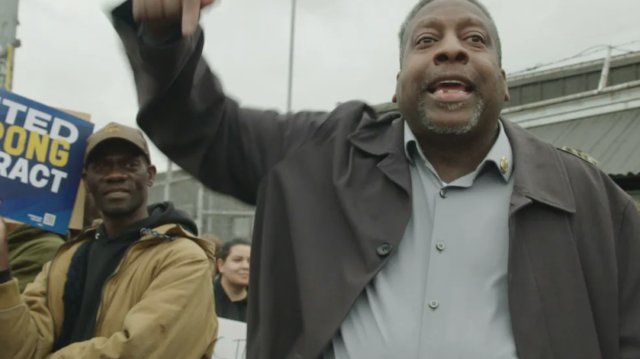
The film unfolds in New York, the city where Kopple was born. It follows three groups of workers in their battles for better conditions and wages. 2.4 million packages are delivered in a typical day in the Big Apple. Kopple focuses on UPS drivers, Amazon employees and app-based bike delivery workers that keep the metropolis ticking.
The legendary director, now 80, feels as passionate about unions as she did 50 years ago. “They’re the only way that workers can get respect at what they do, get decent wages, be cared for if they get hurt or have a gripe. If something happens, they have someone who has their back and can fight for them.”
Back in Harlan County days, coal miners were dying young from black lung disease. In today’s service economy, delivery workers face ‘deactivation’ if customers complain or if they do anything management dislikes. Dozens have died in accidents on the job. They’re often immigrants, wages are low and if they’re ill or ask for compassionate leave, the bosses may punish them. Amazon doesn’t even put its name on its contracts with its employees, hiding itself behind sub-contractors instead.
“It’s really quite horrible and disgraceful. It’s a moral thing. In both these films [Harlan County USA and Union Town], there is the death of somebody: the death of [miner] Lawrence Jones who was shot in Harlan County, and the death of [delivery worker] Victor Hidalgo who was hit by a truck.”
Kopple filmed in the funeral parlour where Victor’s body was lying in its casket. “Victor’s aunt wanted people to know that she loved this boy so much. She didn’t want him to be forgotten,” the director explains why the family allowed the camera to capture them at moments of such profound personal grief.
The outside world remains oblivious to the problems faced by the workers, “They see these people riding around [but] they become invisible, disposable. They’re just there to give them their food and medication or whatever they’re ordering. It’s similar to Harlan County or American Dream where people worked in the coal mines but nobody saw their face and nobody knows their background. Here, if you work in a warehouse, nobody knows who you are. If you deliver something, maybe they will see your face but they won’t know your story.”
In the new documentary, sold by Autlook who is also representing Harlan County and American Dream (excluding North America, Australia, New Zealand, UK and Ireland), Kopple gives these workers an identity. Viewers learn how committed they are to their jobs and hear all about their hopes and dreams.
“For me, it is all about the people. You learn through the people, you feel what it is going on. I really hate that people don’t know these stories, I also think that bringing out big issues, you would get lost if it was just talking heads trying to tell you what to think. I think you have to experience life with these people,” she reflects. “They’re telling wonderful stories, you feel for them, you laugh. It’s human stuff, not there to bang you over the head. It gives you a lot of hope that they’re out there, they’re fighting, they are caring.”
In New York, when demonstrations take place, the protesters find surprising amounts of public support. “Lots of people come out. You see thousands and thousands of people marching in the streets. I think the more we make films like this, the more people will understand what unions are about. They’re not perfect but they can really help.”
Union Town came about in unlikely circumstances. One of the producers, Peter Palandjian, had called Kopple up and told her he’d “love to see a third film from you on unions. Would you be interested?”
The director responded “of course,” and started by filming UPS whose employees were threatening to take massive strike action. In the event, they won a new contract raising wages for both full time and part-time staff. Then came Amazon whose workers were fighting for union recognition. As for the ‘deliveristas,’ Kopple met one of her main protagonists thanks to her [Kopple’s] husband who teaches labour history at Cornell. She was one of his students. Kopple heard her speak at a panel and was then given the go-ahead to feature the Workers’ Justice Project in the documentary.
On one level, the film already feels like a period piece. Most of it was shot during the Biden presidency before the second coming of Trump. Late on, however, we do see grim footage of Trump’s ICE agents targeting the immigrant workers.
“It’s a world where the deliveristas have absolutely nothing. They have to buy their gloves, their motorcycles or their bikes. Beyond that, they have to look over their shoulders now to make sure that ICE is not trailing them,” Kopple notes.
Odds are stacked against them but the delivery workers have had some wins, for example securing a minimum wage and a right of appeal if they are dismissed.
Ask Kopple how she wins the confidence of her subjects and she replies: “I just really love these people and I have a curiosity to see who they are and what they are about. I am there and I care. No-one else is out there caring about what they’re doing. I’m there for them when they are scared, when they have a victory or when they have lost somebody that they loved.”
Kopple is one of the most venerated documentary makers working in the US. That, she jokes, is sometimes the problem. Potential financiers assume that she’ll get the money elsewhere.
“They say ‘she doesn’t need it. She made Harlan County.’ They’ve been saying that since I made Harlan County. I need it more than anybody. I need it to be able to do these films. It’s my DNA. It’s my life blood.”
In films like Union Town, she is calling out powerful corporations known for trying to suppress media criticism. “I can’t be afraid. If you are afraid of what somebody might do, you’ll never get anywhere. Being silent for me is not the way I want to live my work or do my work,” the director strikes a defiant note.





