The two narrative lines in Ahmet Necdet Cupur’s Les Enfants terribles are clear, unambiguous and fascinating to observe. The young and gentle Mahmut, in his early 20s, wants to divorce his equally gentle young wife, who is a mere 17 years. It is a marriage without love, and one that he wishes to bring to an end with as little rancour as possible.
Meanwhile his feisty teenage sister Zeynep wants a lot more out of life than what is currently on offer, working in a clothes factory. She wants a university education away from the stifling and oppressive family home.
What stands in their way is tradition, parental inflexibility and the threat of conflict, whether verbal or physical, whenever they step out of line by articulating their desires. “Be grateful I let you speak,” Zeynep is told by a father prone to physical and noisy expressions of anger and frustration. On occasion the audio picks up the sounds of objects being flung and glass being broken.
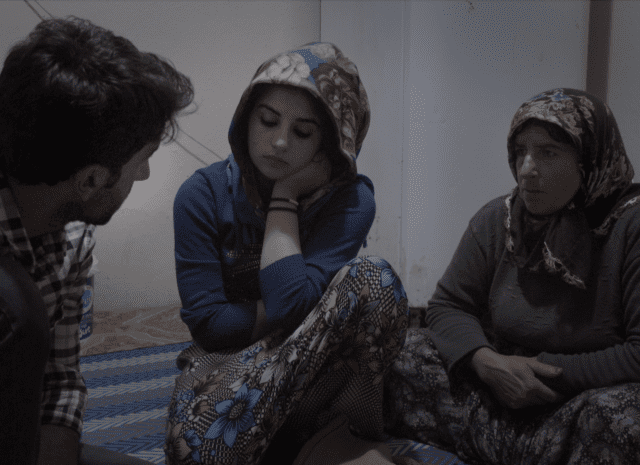
Zeynep’s relationship with her mother is more upsetting to observe, played out verbally in two long scenes which grow in intensity as Zeynep’s articulacy is met with her mother’s bewilderment and obstinacy, finally cruelty.
“Your words mean nothing to me,” the mother tells her daughter, who in turn responds, “because I’m telling the truth…I won’t stop just for your peace of mind.” But women were created by God to stay at home, her mother counters, before suggesting that a bullet would shut Zeynep up and that she’d “rather love a stray dog.”
“When I saw Zeynep defend herself I did not expect this level of verbal violence,” says director Ahmet. “Killing, shooting you with a bullet. Loving a stray dog more. I don’t believe that she wants that, but I wasn’t expecting it… This scene, I think, is the heart of the film. It makes us feel a lot for Zeynep.”
Just as painful to observe, but thankfully without violence, are the long exchanges between Mahmut and his wife Nezahat, during with both remain silent for extended passages. “My mistake was to marry her without love,” he concedes. “She has no problem at all. I am the problem.” She is in turn very much saddened by his lack of interest in her, commenting of her expectations of marriage, “happiness, peace and love. I have none of these.”
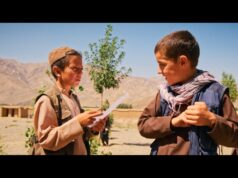
On returning to Turkey after working in Iraq, Afghanistan and France, director Ahmet was, he comments, surprised by how much his village (Keskincik in the south east of Turkey) and the surrounding area had changed. “There were always traditions in the region but I didn’t recognise this new level of conservatism. I didn’t recognise how the world had changed,” he says. “In the western world we are defined by what we do in life. For example, I am a filmmaker and I present myself in France as a filmmaker. In the village in Turkey we define ourselves by marriage, by how your place in society is determined by your ability to create a family, and produce some more just like them.”
But Ahmet stresses how he also observed an associated and deep sense of resilience among the region’s youth, as demonstrated by his younger sister. “Zeynep and Mahmut are the first people to choose this way of confrontation – to confront their parents. But I realised with other girls and boys that I filmed in the village, that they all have this new attitude.”
Did the director feel an especially close kinship with, or pride for, the siblings he was seeing again after such a long time away. Yes, he responds, but there were more pressing concerns, especially for his young sister, who throughout the film is planning her salvation via education. “My situation with Zeynep, more than being proud…I was like, ‘how can she be less tired so she can stay and fight until she arrives at the point where she wants to.’ Every time she had difficulties, she knew that I could help her get up on her feet. But I had to be very careful for her to choose her own path and not to be too intrusive.”
“The pride came later in post-production when I was watching the footage and realising the extent to which she was confronting everybody.”
None of Ahmet’s family has yet seen the film. He wants to screen it first to his siblings
and await their ‘authorisation’ before showing it to their father and mother. What does he think the parent’s reaction will eventually be?
“I don’t know what will be my father’s, sometimes it’s very hard to see yourself on the screen and see yourself really how you are,” Ahmet responds. “I think my mother will be very disappointed to see herself as a person in the one layer, which was a little unjust to her because she was supportive at other times to Mahmut. But the confrontation with Zeynep? I don’t know why she doesn’t like girls. I don’t know why she doesn’t like her daughters, and showing her confronting Zeynep twice – I think she will be very disappointed.”