Pascale Bourgaux’s documentary in VdR National Competition tells the harrowing story of children born to Yazidi women who were kidnapped and presented as trophies to jihadi fighters in Syria. The insightful film explains how the children, “the bastards of Daesh,” as they became known, are nowadays all but invisible with no official records of their births.
In 2014, the Islamic State took control of Northern Iraq, crossing the Sinjar, home to the Yazidi community. Many men were killed and women and girls were kidnapped with the intention of “offering” them to jihad fighters on the slave market.
The film follows the story of Ana (not her real name), one of the women who was imprisoned and raped over the course of several years. She gave birth to a child, Marya, in captivity before finally being freed, but her family and her Yazidi community refused to let her bring her child home. As one woman Yazidi elder, who re-baptizes the women who had been kidnapped so they can become Yazidi again, says of these babies: “we don’t want evil beings.”
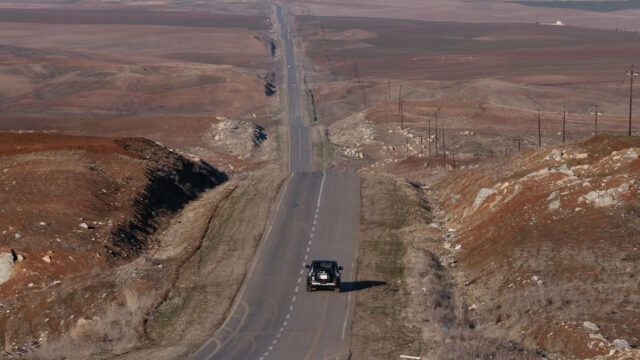
Ana is one of the first mother-victims to break the silence – she testifies with her face hidden from the camera for her security. For Ana, neither her family nor the Yazidi community must be aware of the real purpose of her journey with filmmaker Pascale Bourgaux across Kurdistan. As she sits in the back of the car she longingly looks at pictures of her child on her mobile phone. ”At first I hated that child,” she says. “Because she was the enemy’s child.”
She describes how ISIS came to her village in 2014 when she was 19. “They were armed and had long beards and long hair,” she says, recalling how she was taken to Syria. “They had a lottery – each fighter, one Yazidi woman. I was scared to death. He raped me…I lost blood and was unconscious for two hours. “Rape became a routine…a daily occurrence,” she adds. “I got pregnant. I did everything to abort as I knew once I had child I could not escape. She was born – so innocent, I was submerged with maternal love.”
Watching video film of survivors being freed, Ana tells how her father and uncle told her that must leave her child behind, a demand that she refused. “How could I abandon a one year-old baby?” She was told that Marya’s father is a jihadist from ISIS and “he killed many of our people.” She told them: “She’s just a child…she’s not responsible for those crimes.”
With help of a Yazidi woman she eventually tracks down Marya to an orphanage in Syria.
“The person sent pictures of the children and finally I recognised my daughter,” says Ana. “I decided to go and see her. I was taken to the orphanage to spend a few days with her.”
The film adds in footage of Peter Galbraith, a former American diplomat on a humanitarian mission, who helps facilitate the reunion of women and children, before we are returned to Ana as she is reunited with the child who has been eagerly waiting for her. But Marya is living with another family who are keen to keep on looking after her. “Marya is our child…she is not a stranger,” they say. For Ana it is an emotional dilemma – her daughter is happy and being looked after, but at the same time she cannot take her with her…
Final on-screen graphics make for stark reading. The Yazidi, Kurdish and Iraqi authorities all deny the existence of children born from rape by the jihadists. To avoid being separated from their children, more than 1000 Yazidi mothers have chosen not to return to their community. They are officially recorded as “missing”.
While straight-forward in structure, filmmaker and author Pascale Bourgaux’s film is both insightful and tragic as it gives an essential voice to women who have had to bear such trauma and yet are faced with additional pain as they are further separated from their children. It is a story that demands to be told.
Belgium-Switzerland, 2023, 74mins
Dir: Pascale Bourgaux
Production: Iota Production, Louise Productions Lausanne
International sales: Cat&Docs
Producers: Isabelle Truc, Elisa Garbar
Cinematography: Mohammad Shaikhow
Editor: Sophie Vercruysse
Music: Nicolas Rabaeus