





DocuDays 2026: Dutch prod Renko Douze on Don’t Ask Me If I Killed
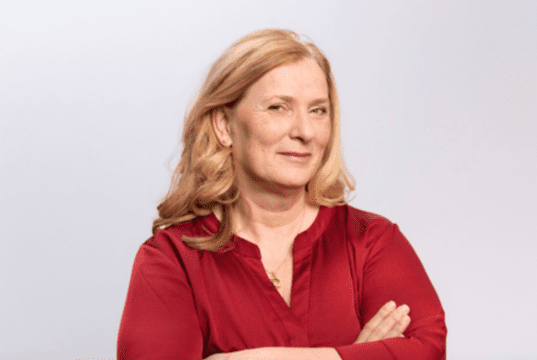
Dutch producer Renko Douze discusses Ukrainian Helena Maksyom’s feature doc Don't Ask Me If I Killed, sold by Esther van Messel’s First Hand Films, that chronicles the director’s life as a soldier in defence of her country. “It’s such a special and individual story. It’s really her story - and a very human perspective on the frontline,” Douze says.

Sheffield DocFest International Comp: MKO by Ose Oyamendan
In his feature documentary, Nigerian-American filmmaker Ose Oyamendan investigates the highly suspicious death in 1998 MKO Abiola, the charismatic billionaire businessman and media mogul who should have been President of Nigeria. “Going into this film, my first objective was that I am going to take my biases out of it. I am going to take out whatever preconceptions I have,” Oyamendan tells BDE. He was always respectful but, as he further notes, he is an activist who “was brought up to question and fight authority.”

Sheffield DocFest Int’l Comp: The Archivist by Tim Plester and Rob Curry
There is hardly a corner of the UK that Doc Rowe, the man described as “Britain’s great folklorist,” hasn’t visited and chronicled. He is indefatigable in his attempts to get to these events, if his health will allow it. “There’s a uniformity to them, in that they speak to people’s need for ritual and belonging, but there is also a uniqueness about every single one of them,” Curry suggests of the folk festivals, and Doc Rowe’s fascination for them.

Sheffield DocFest 2026: Festival director Raul Niño Zambrano
“We are really a nurturing festival. We can take care of each of the films and we promise you will not get lost in an avalanche of too many,” Sheffield DocFest boss Raul Niño Zambrano explains why he favours a streamlined, yet expansive approach within his selection. “I think, for us, balance is the key word,” he reflects on how the festival addresses the huge social and political convulsions of the current era while also finding space for lighter fare.

Sheffield DocFest Int’l Comp: Time Machine Maidan by Roman Liubyi, Volodymyr Tykhyy
Time Machine Maidan has been described by its co-director Roman Liubyi as “an upside-down mockumentary.” The film (also directed by Volodymyr Tykhyy) is structured like a time travel fantasy, but deals in forensic detail with some seismic moments in recent Ukrainian history. Liubyi talks to Business Doc Europe on the eve of Sheffield DocFest, where it world premieres in International Competition.

Krakow FF Int’l Comp: Silent Flood by Dmytro Sukholytkyy-Sobchuk
Silent Flood, which has just won the Silver Horn for High Artistic Value at Krakow, isn’t a film in a hurry. Ukrainian Dmytro Sukholytkyy-Sobchuk is telling the story of a closed religious community based in rural west Ukraine. Life is quiet and peaceful - or at least would be if it weren’t for the constant floods and the wars that have bedevilled the area. And then came the full-scale Russian invasion… The director talks to BDE.

Krakow FF Int’l Comp: Tristan Forever by Tobias Nölle and Loran Bonnardot
Tristan da Cunha may be the most remote inhabited island on the planet, but it is nevertheless the place where Loran Bonnardot, a piano-playing doctor from Paris, is determined to settle. His existentialist journey, part-fictionalised, is chronicled by Swiss director Tobias Nölle. “I saw in Loran a castaway from our hyper-competitive society, seeking an authenticity we’ve lost, on an island secluded from our war-torn world; a dream I wanted to transform into a cinematic experience,” he says. The film won The Golden Horn for Best Film in International Competition at Krakow 2026.

Tribeca/Sheffield DocFest: Colors of White Rock by Khoroldorj Choijoovanchig
Mongolian director Khoroldorj Choijoovanchig and French co-writer Chantal Perrin talk to BDE about their feature doc Colors of White Rock, which reintroduces us to Maikhuu, one of the few female drivers on the treacherous ‘coal highway’ that snakes through the Gobi Desert. It is a gritty but poetic film. “I didn’t want it to be really, really political, but in a way the topic, the theme of the story, engages with the current situation in Mongolia,” the director notes to BDE of a story that can’t help but have a strong political undertow.

Krakow FF Int’l Comp: Magic Hour by Marcin Borchardt
In Magic Hour, world-premiering in Krakow, director Marcin Borchardt profiles the brilliant Polish DoP Piotr Sobociński who struggled with the extreme stresses of working within the Hollywood system. He died of a heart attack while still in his creative prime. “That was perhaps the most unsettling discovery for me,” Borchardt tells Business Doc Europe. “I found countless shots of anonymous hotel interiors and temporary spaces filmed between productions. It was as if the camera had unintentionally captured the psychological cost of that career and that lifestyle.”

Krakow FF Int’l Comp: The Winning Generation by Marco De Stefanis
The Netherlands-based Italian filmmaker discusses his new feature documentary, selected for Krakow FF Int’l Comp, about the ongoing febrile political situation in Armenia. “The moment I got interested in Shahen was when I realised the pressure this young guy was under,” recalls director Marco De Stefanis of his activist subject. “He was keeping up the fight while his father was in prison. I felt really sorry for a guy that age that doesn’t have the same youth I had.”





