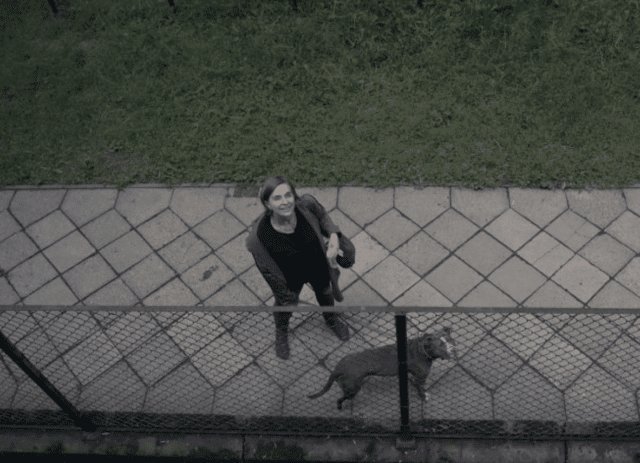
Paweł Łoziński’s The Balcony Movie
There is a pervasive Polish presence within every nook and cranny of this year’s IDFA.
Several feature docs are in official selection. Kacper Lisowski’s Judges Under Pressure (telling the story of courageous judges standing up against intimidation from the right wing Law and Justice Party) is a world premiere in the Festival’s Frontline section.
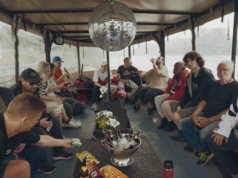
Paweł Łoziński’s The Balcony Movie (shot from the director’s own balcony) is in IDFA Masters while Tomasz Wolski’s partially animated secret police doc 1970 screens in Best Of Fests.
Joanne Popińska’s The Choice, a co-production between Canada and Poland, is in DocLab Competition for Immersive Non Fiction and there are plenty of Polish projects in Docs for Sale.
Although the Poles aren’t represented in the Forum, next week sees a Polish Docs PRO showcase at IDFA (on 22 Nov) for four new Polish docs that are still works in progress: Leon by Wojciech Gostomczyk (about an artist whose extreme plans risk alienating family and friends); the abortion doc 5 Pills Away by Karolina Domagalska; music doc Pianoforte from Jakub Piątek, about young piano virtuosos competing in the International Chopin Competition, and Base 13 by Paweł Hejbudzki, set within the rough and tumble world of kids’ kart racing.
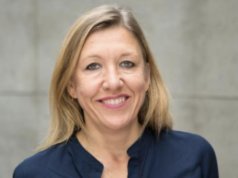
Contemplating these many projects, Katarzyna Wilk, Festival Sales manager at export and promotional agency Polish Docs, highlights their diversity.
Polish Docs, run by sister organisation the Krakow Film Foundation was launched 15 years ago. “We started very modestly at DOK Leipzig, Ji.hlava and IDFA in 2006,” Wilk remembers.
Since then, the visibility of Polish documentaries at international festivals has skyrocketed. “The sales are really important but it’s not so easy because the Polish films are so artistic and creative…from my point of view, the most important change is that a 1000% more films are now screened internationally,” Will notes of the increased prominence of Polish docs abroad.
Polish documentaries have continually picked up all sorts of awards at festivals, a trend that is still continuing. For example, Weronika Jurkiewicz’s The Vibrant Village won the Best Student prize at the Calvert Journal Film Festival earlier this month while Andrei Kutsila’s When Flowers Are Not Silent received a Special Mention at the Ji.hlava festival. At DOK Leipzig, Karol Palka’s Bucolic was given the Silver Dove award for Best International Documentary and The Balcony Moviewon the MDR Film prize.
Polish Docs receives its funding from a mixture of sources: the Polish Film Institute, the Ministry of Culture, regional funds and, sometimes, international partners.
Wearing a different hat, Wilk is looking forward to inviting international guests back to the Krakow Film Festival, one of Europe’s oldest documentary events (next scheduled for late May 2022). “We did an online edition last year and a hybrid edition this year – so our main goal for next year is to do a normal event and to bring International filmmakers [to Poland]. That is what we missed the most – the international film industry and international filmmakers.”
Krakow is an Academy and EFA qualifying festival which generally attracts its share of world and international premieres.
Thanks to Polish Docs, local documentary directors are ever more prominent abroad – but they benefit from exposure in Krakow too. “What is most important for us is to be with the filmmakers from the very beginning,” Wilk says of how Polish Docs begins its marketing and promotional campaigns for films even before they have started shooting.
“We are helping them. We are a platform to connect them with some funds…at the pitching in Krakow, we represent only Polish projects. For many, it is the first step where they can show the projects to the international decision makers.”