Czech director Pavel Borecký’s eco-documentary Living Water is on quite a run. It is showing in Visions du Réel in National Competition, is in the CPH:SCIENCE section of CPH:DOX shortly afterward and then in Movies That Matter in the Netherlands in a screening arranged in co-operation with the Dutch Ministry Of Foreign Affairs.
Later in the summer, Covid-permitting, the film (sold by Moscow-based Antipode) is expected to be shown in Jordan. It will also help its director rack up plenty of credit for his multimedia PhD on water scarcity in the Middle East at the University of Bern in Switzerland.
Living Water looks at the competition for water in Jordan, ranked as one of the most “water-poor” countries in the world. Everyone wants it: the Bedouins, the farmers, the city dwellers – but there is just not enough of the “blue gold” to go around.
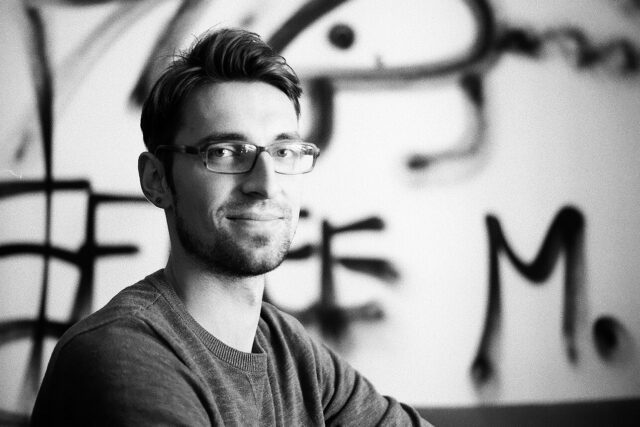
Borecký is a filmmaker laden with academic qualifications. He has an MSc in Sustainable Development and MA in Social Anthropology and has undertaken research projects everywhere from Peru to Estonia. The original idea for Living Water came when he co-curated the Goethe Institute’s Amman-Prague cultural programme, Carte Blanche Middle East.
“I noticed the importance of water in everyday politics, in people’s everyday conversations,” the director remembers. He also observed the concern coming from NGOs and international organisations that crisis could be imminent in the region.
Jordan does not have enough water to serve even the needs of its own population but the country, which has a long tradition of hospitality, continues to accept refugees from neighbouring countries, especially Syria. At the same time, water is being diverted to the coastal city, Aqaba.
“What I am trying to question [in the film] is priorities. What do people prioritise and why,” Borecký reflects.
Aqaba is being promoted by the Jordanian government as a booming tourist destination. If it grows and thrives, the entire country should benefit from the boost to the economy. Aqaba is a special economic zone – the only place in the country where there is constant access to water. However, the city takes its water from under the Wadi Rum, the valley 60km away in the desert, which many others also depend on.
Borecký is at pains to point out that he is not judging the Jordanian water policy. He is observing it and trying to “offer a platform for debate,” to stir emotions and to highlight paradoxes. That is why he is so keen for his film to be seen in Jordan. With support from the Swiss Development Agency, he is very hopeful that screenings, workshops and panel debates will be held across the country later this year, after Ramadan.
“I am not really judging them because, at the end of the day, the [Jordanian] state, which is very often demonised by Bedouins…you see that they have their own struggles with the Syrian refugees up north.”
“There are no really good and bad guys,” the director continues. Nonetheless, he asks probing questions about everything from Jordanian agricultural policy to “how precious water is used by the most powerful people for personal benefit.”
In the film, the Jordanian backdrops – the deserts and red mountains – look spectacular. “What I am really enjoying is that Dune or Lawrence Of Arabia or Star Wars or The Martian, they were all shot in this same picturesque landscape as you can see in this documentary,” the director notes of the many big budget movies set in the area.
There are also striking images of water itself – of the machines used to extract it, or of plumbers and farmers using to or trying to conserve it. This is not a character-driven documentary. The one element the filmmakers continually refer back to is the water itself. Borecký describes the precious water as “the medium that mediates relations and allows certain things to grow.”
“We always ask the same question – what does the water do in the landscape? Then other questions follow like: who is taking care of the water?”
Whether he is portraying a lone shepherd, a village, a farm or a city, Borecky’s main interest is always in the human relationship with water.
The director acknowledges his debt to sci-fi. “What I like about the connection between science and fiction is that it really pushes the imagination,” he says. In sci-fi, he adds, there is always “this grain of forewarning embedded in our experiences right now. We can recognise ourselves and our imagination and aspirations in science fiction stories, wherever they are set and at whatever moment in history.”
Borecký was invited to the University of Bern by Prof. Dr. Michaela Schäuble, a leading social anthropologist known for her work in Media Anthropology, and who also has a documentary background. He is not the only filmmaker to have emerged from the programme there. Laura Coppens, director of 2019 festival hit Taste Of Hope, is a research assistant in the university’s Institute of Social Anthropology.
“There’s a bunch of people [there]. We share the same passions and interests more or less, but our fields are different,” Borecký notes of the camaraderie among the academics turned filmmakers. “I find it to be a very fruitful environment.”
The director is due to finish his PHD later this year. In gaps between study, he will be accompanying Living Water wherever he can. He would also like to continue working in Jordan, perhaps to make a more “participatory” film involving younger people living in the country.
“I think it is one of those ticking bombs, the demographic bomb,” Borecký says of recent surveys suggesting that 50-60% of the Jordanian population between 18 and 25 are planning to leave the country. “I am afraid this is becoming one of the main issues for the 21st Century. If people for one reason or another start to be unhappy where they are, they start moving. Every year, the number of migrants is growing…”