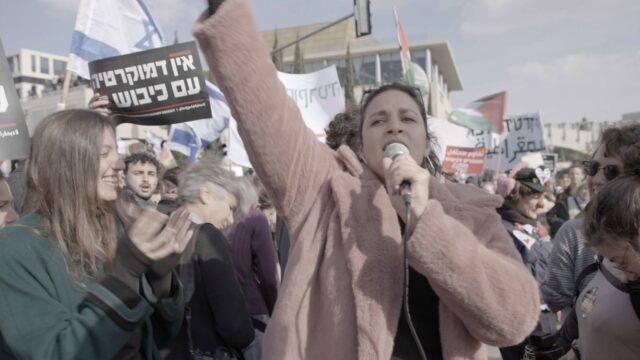
Noam Shuster Eliassi is a fearless and uproarious Israeli stand-up comedian. In her routines, she regularly touches on subjects other comics don’t dare go near. She grew up in Neve Shalom – Wahat Al Salam (“Oasis of Peace”), a community where Jews and Palestinians lived side by side. Her comedy and her political activism sees her return again and again to the question of why there is such bitter and long running conflict between the two peoples.
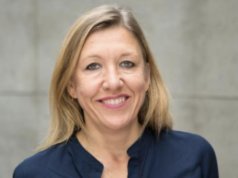
In her latest documentary, Coexistence, My Ass (a world premiere in Sundance’s World Cinema Documentary competition), New York-based filmmaker Amber Fares follows Noam as she tries to use comedy to solve the Middle East crisis and as she develops her stand-up routine at Harvard University (where she won a fellowship),
This is the second film Fares has made with the comedian. It follows on from Reckoning With Laughter, about both Noam’s comedy and her strange experiences after catching Covid at the very start of the pandemic.
“I had started filming with Noam in 2019 before the pandemic,” the director (whose earlier feature doc Speed Sisters premiered in Hot Docs in 2015) explains the links between the two Noam movies. “As the pandemic hit, there were a lot of broadcasters looking for content. I approached Al Jazeera and said I have this project but, at the same time, I think I am making a feature. They knew that this [Reckoning With Laughter] was a proof of concept in a way.”
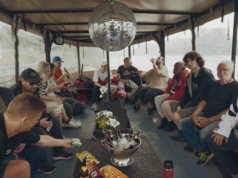
When Noam was in quarantine in a hotel at the start of the pandemic, Fares got her to self-film. The comedian was part of an unlikely community made up of fellow Covid sufferers. Some were Israeli, some were Palestinian – and the virus didn’t discriminate between them at all.
Fares had first met Noam when she was living in Ramallah. “I was there for quite a while…she was with a group of friends of mine. We sort of became friends.” When Fares left Ramallah and moved to New York, they stayed in touch “very loosely” on social media. But then Noam came to Boston to do her Harvard fellowship and the friendship was revived. At that point, Noam told her about her plans for the one woman show.
“I thought, wow, this is really interesting and kind of genius. I didn’t even know that she was that funny…she’s a funny person to talk to but that’s a lot different from standing up telling jokes.”
Fares picked up a camera and went up to Boston to record the show. Back then, there was no intention to follow the comedian to Israel. It seemed much more likely that Noam would take her chances in trying to break through in the US. “That’s what I thought the film would be about…”
And, yes, it was strange suddenly to be filming someone who previously had simply been a friend. “But there was a lot of downtime…there were times she was with me and we were not filming. And there were times when I would go and spend time in Tel Aviv, spend time with her family and not have a camera. I think our friendship is stronger than it was. We know each other so much better.”
One regret is that the director wasn’t able to make Noam’s wedding which took place last autumn. “It was the day that Iran sent all those missiles over…so I wasn’t able to be at the wedding.”
The idea was always to structure the film around the ever-evolving comedy show. That proved more challenging than Fares had envisaged. “Every performance is different…we used old performances of hers to guide us. It wasn’t one singular show.”
The story changed over time. There is footage of Noam taking part in protests in Israel. At certain moments, the focus shifts toward the subject’s private life. At one point, she breaks her leg (she fell off a bike) and has to be taken around in a wheelchair).
Noam is more comfortable and relaxed performing in the US than in front of home audiences in Israel – but it’s in the Middle East that her comedy seems at its most challenging and provocative.
“Noam has a niche where she does her stand-up. Those are in mixed areas, in Haifa, in Jaffa, in those theatres where she draws a lot of left-wing Israelis and Palestinian citizens of Israel. There, there is a real appreciation of Noam. I think that in the mainstream comedy world, political comedy in Israel is really tough. But what Noam did that is really interesting is her satire.”
Noam would go on prime-time Israeli shows and do skits in Arabic. These would then be put on online and go viral across the Middle East. “She has that ability to blur lines and bring people together,” Fares notes of how Noam’s comedy hits home with Israeli and Arab audiences. “She has such a purpose with her comedy.”
After the October 7th Hamas atrocities, the tone of the documentary inevitably changed, becoming darker and more introspective.
“We realised we had been filming these events that had been leading up to this event…once October 7th [happened], it became clear what the film was about.”
Noam was closely involved in every aspect of the production. “She really needs [to see] how we are using the jokes and what they are leading to. She has seen edits throughout.”
Funding for the project took time to pull together. “Money would trickle in. That seemed to happen when we needed it.” Eventually, ARTE, Intuitive Pictures and Little Big Story came aboard. There was support from, among others, Women Make Movies, The Catapult Film Fund, The International Documentary Association The Jewish Film Institute and Jewish Story Partners. Autlook is handling world sales. The producer is Rachel Leah Jones.
Fares has barely finished the film, rushing to get everything done in time for the Sundance premiere. The aim now is to launch an impact campaign. In Park City, the director, who has a second career as a cinematographer, is also part of another new film, Life After, directed by Reid Davenport and telling the story of Elizabeth Bouvia, a Californian woman who, in the 1980s, fought for the right to die.
“I love it!” Fares enthuses about the upside of doing the camera work and not “having the responsibility [as director] to make the decisions. I really love cinematography, its collaborative nature.”