

Kees Driessen

European Film Awards: Apolonia, Apolonia by Lea Glob

For 13 years, director Lea Glob filmed her friend Apolonia Sokol, who was to become a globally renowned painter. What starts out as a portrait of a charismatic young artist ends up, through the magic of longitudinal documentary, as a much more far-reaching picture of the art world, the struggle against patriarchy – and life. And it’s a film you don’t want to see come to an end.
European Film Awards: Four Daughters by Kaouther Ben Hania
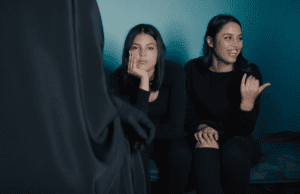
Kaouther Ben Hania’s Four Daughters masterfully uses the intricate complexities of self-conscious re-enactment to intimately explore the lives of a mother and her four daughters – two of whom have disappeared and are therefore portrayed by actors. In so doing, Ben Hania’s film joins the ranks of masterpieces, such as Joshua Oppenheimer’s The Act of Killing and Kitty Green’s Casting JonBenet.
IDFA Frontlight review: Stamped From The Beginning by Roger Ross Williams

From early justifications for slavery to the discrimination faced by Black Americans today, Stamped From The Beginning argues that economic power has always been at the heart of systemic racism. Oscar-winning director Roger Ross Williams uses interviews and animated sequences to especially highlight the anti-racist activism of Black women.
IDFA International Comp review: Life Is Beautiful by Mohamed Jabaly
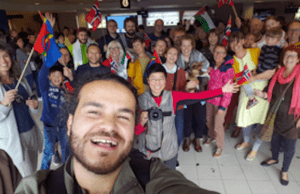
A Palestinian filmmaker is stranded in Tromsø, above the Arctic Circle, unable to return to Gaza. This was Mohamed Jabaly’s situation in 2014 when he began filming this documentary. But while his emotional and political vicissitudes inevitably mirror the current war in the region, Jabaly never lets us forget his motto: life is beautiful.
IDFA for Youth Doc Comp review: Another Body by Sophie Compton,...

This gripping and emotional documentary about female victims of deepfake revenge porn itself ingeniously employs deepfake techniques to protect the identity of its protagonist. In doing so, it demonstrates both the complexities of digital anonymity and the frightening levels of perfection the technology has already reached.
IDFA Opening Film review: A Picture to Remember by Olga Chernykh
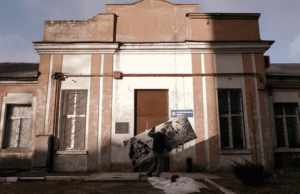
As the war in Ukraine continues, there is a danger that the outside world will slowly stop paying attention. Especially since the escalation of the Israeli-Palestinian conflict. Olga Chernykh’s stylistically daring yet accessible film is here to remind us that an unjust war still rages in her country, which makes its selection as IDFA’s opening film all the more poignant.
Venice Critics’ Week 2023: Malqueridas by Tana Gilbert
The strength of Sisterhood is fully evident in Tana Gilbert’s Malqueridas, in which mothers incarcerated in a Chilean prison help each other through their darkest days, separated from their children. They find affection and community in each other’s presence, together protecting and empowering their existence and humanity, proof that Sisterhood is feminism’s most powerful weapon and therefore the Patriarchy’s mightiest opponent.
Venice Out of Competition: Hollywoodgate by Ibrahim Nash’at
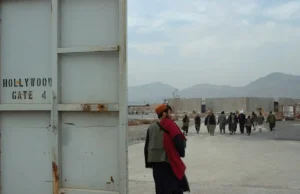
Hollywoodgate, which follows the Taliban for a year after America’s withdrawal from Afghanistan, often feels like a first rough cut, withholding almost all contextualisation of the material. But the film, with unprecedented access to some of the Taliban’s leadership and their chilling discussions of violence and the oppression of women, nevertheless makes for essential viewing.
In Memoriam: Leonard Retel Helmrich (1959-2023)
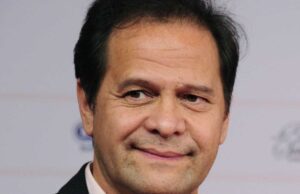
Dutch documentary luminary and ‘master of the impossible shot’ Leonard Retel Helmrich passed away last month. He was the author of one of the great projects in the longitudinal tradition, his Indonesian trilogy The Eye of the Day, Shape of the Moon and Position Among the Stars. Indeed, Retel Helmrich’s 3-part masterpiece deserves a ‘position among the stars’ within the documentary canon, writes Dutch critic Kees Driessen.
Cannes ACID review: In the Rearview by Maciek Hamela
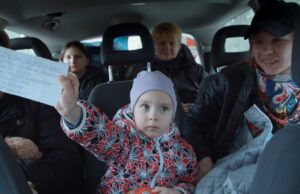
This year, a visitor to Cannes could be forgiven for thinking the war in Ukraine had already ended. War fatigue may be understandable for an audience which is not itself under occupation, but it’s not an option for the Ukrainian population. Which is why need films like Maciek Hamela’s In the Rearview; to rekindle the flame of empathy, to stimulate ongoing conversation and awareness and, as the director warned at the Cannes screening, to remain ever vigilant.





