

Kees Driessen

CPH:DOX review: The Other Profile by Armel Hostiou
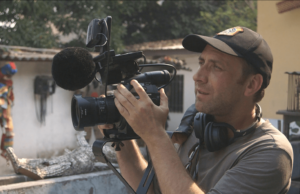
A puzzling documentary thriller… On the surface, it’s about French director Armel Hostiou trying to uncover who in Kinshasa set up a false Facebook profile in his name. But by digging up layer after layer of fakery, the film itself ends up looking suspiciously unreal, but in a most interesting way...
Berlinale Forum review: Dearest Fiona by Fiona Tan
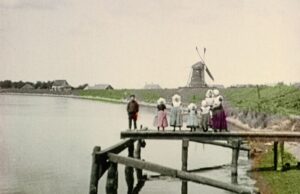
Dearest Fiona, an art film by Fiona Tan having its world premiere in Berlinale’s Forum section, consists of two very different elements. We see scenes from silent Dutch documentaries, showing life at the beginning of the 20th century. And we hear an actor reading letters her father wrote to her around 1988/89. I went looking for a way to connect the two. The production company behind the film is called Antithesis Films. That’s an interesting name. Let’s use that as a starting point…
Berlin Panorama review: The Cemetery of Cinema by Thierno Souleymane Diallo
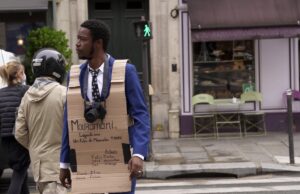
In his highly engaging feature debut, Guinean director Thierno Souleymane Diallo sets out to find the lost first film by a Black filmmaker from francophone Africa, 1953’s Mouramani by compatriot Mamadou Touré. The quest seems at times both disheartening and optimistic, but watching Diallo’s efforts is as easy as taking a walk in the park. Although a lot happens, the film just glides through it all, propelled by the director’s winning personality and his unwavering optimism about his craft and his art.
Berlinale Forum review: In Ukraine by Piotr Pawlus, Tomasz Wolski
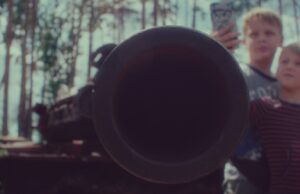
Piotr Pawlus and Tomasz Wolski’s distanced approach to everyday life in war-torn Ukraine may make for uncomfortable tension as its impersonal concept seems to prevent real human connection, but this more measured and sociological take gives the viewer time to reflect on the daily realities of war away from the frontlines. And there is much to be said for this approach.
Berlinale Special Gala review: Superpower by Sean Penn, Aaron Kaufman
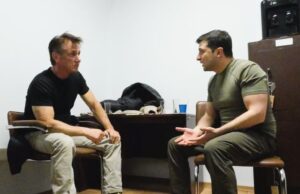
Sean Penn and Aaron Kaufman’s portrait of war-torn Ukraine, focusing on President Zelenskyy, is a personal exploration of the conflict in the simplest terms, aimed at reaching an American audience that knows little about the country. As such, it works, and if it manages to reach and inform its target audience, inspiring them to support Ukraine, then Superpower, in its chosen genre, should be deemed a good film.
IFFR Cinema Regained review: Kavur by Fırat Özeler
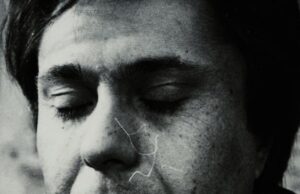
Even for those, like me, unfamiliar with the later Turkish filmmaker Ömer Kavur’s oeuvre, this hybrid road movie which bears his name is a compelling and gorgeously shot meditation on how to live, travel and work. Melancholic and seemingly outside of time, Kavur, which world-premiered in Rotterdam’s Cinema Regained section, is a rare find.
IDFA Frontlight review: Racist Trees by Sara Newens, Mina T. Son
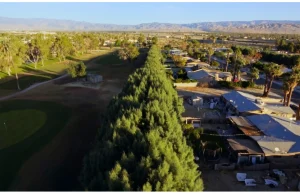
Racist trees! Now that got your attention. And that is exactly what happened in reality. A dense row of trees screening off a historically Black neighbourhood from Palm Springs’ predominantly white, wealthy centre, is the focal point of this firmly rooted, wide-branched documentary, which has its world premiere in IDFA’s Frontlight section.
IDFA Int’l Competition review: Apolonia, Apolonia by Lea Glob
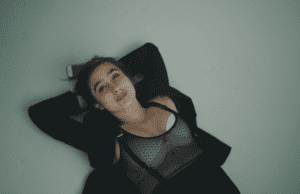
For 13 years, director Lea Glob filmed her friend, the painter Apolonia Sokol. What starts out as a portrait of a charismatic young artist ends up, through the magic of longitudinal documentary, as a much more far-reaching picture of the art world, the struggle against patriarchy – and life. And a film you don’t want to see come to an end.
IDFA Opening Film review: All You See by Niki Padidar
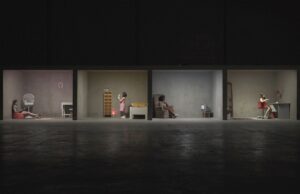
Stylistically bold and as timeless as it is topical, All You See explores the alienation migrants experience coming to the Netherlands. It’s a strong opening film for IDFA, as its main question concerns every documentary in the programme: we look at people, but do we see them?
Ji.hlava IDFF review: Kunstkamera (director’s cut) by Jan Švankmajer
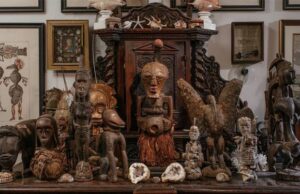
The final feature of the great Jan Švankmajer had its world premiere at Ji.hlava as a near two-hour director’s cut. This documentary on his idiosyncratic collection of art and other imaginative objects feels like stepping inside the surrealist mind of the illustrious Czech filmmaker – including its darker sides.





