



INTERVIEWS
DOK Leipzig German Comp: Hotel Utopia by Julia Groteclaes
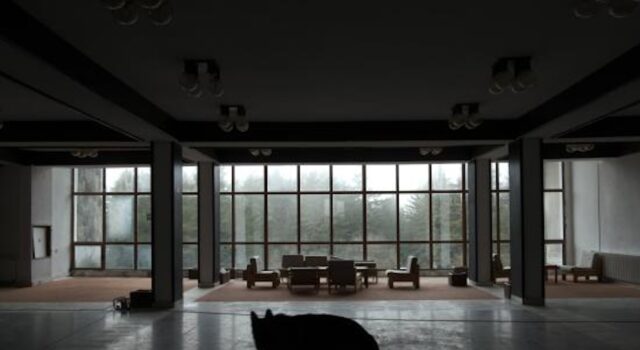
In the mountains of Bulgaria is a sprawling hotel that Munich-based property developer Mathias Zeitler has turned into a remote haven for digital nomads. “Everyone in the digital nomad world knew him. I was never interested in the digital nomads, but Matthias himself was the character who was interesting to me,” director Julia Groteclaes tells BDE. The thing is, it took a while for Matthias to understand that Groteclaes wasn’t just there to make a promotional film on his behalf, and that she might actually have an agenda of her own.

DOK Leipzig 2026: Archive Day October 28
German archive doyenne Monika Preischl guides Business Doc Europe through what has come to be known as Archive Day at DOK Leipzig, when the German and European...
Ji.hlava Opus Bonum Comp: Life Is There by Ishtar Yasin Gutiérrez
Cats and dogs feature very prominently in Life Is There, the lyrical and evocative new documentary directed by Ishtar Yasin Gutiérrez that receives its world premiere in Ji.hlava’s Opus Bonum competition. “I don’t want human beings in the centre of the story. I think that the animals are living with us,” the director tells BDE. “In the film, I talk about orphans. These animals are also like orphans, in really dangerous situations. I feel a real identification with them…also, I wanted to say that these animals are sacred for me.”
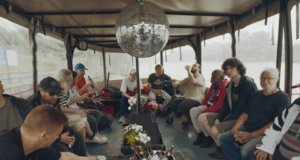
DOK Leipzig German Comp: Haus der Trinker by Janis Westphal
Several years ago, Berlin-based filmmaker Janis Westphal heard about a very unusual housing project in the heart of Berlin Kreuzberg whose residents are homeless alcoholics. Originally founded by a priest, it was one of the first facilities of its kind - a place which followed a radical policy of ‘acceptance.’ In his feature doc Haus der Trinker (Last Round), world-premiering in Leipzig, Janis Westphal tells the story of the establishment, and meets some of its residents. He answer questions posed by BDE.
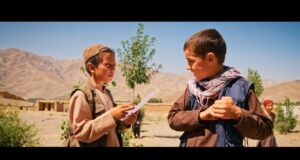
Ji.hlava Opus Bonum Comp: Mohabat by James Longley
James Longley’s tale of a hard-working Afghan boy living in an orphanage alongside other sons of “martyrs,” undergoing a strict religious education, seemed like a bureaucratic nightmare to make, until US producer Alex Gibney stepped in. “I can't think of another producer alive who would have taken on a project with so many inherent risks,” Longley tells BDE. “Without an Alex Gibney, films like this - where the path is rocky and the outcome is initially uncertain - will stop being made.”

DOK Leipzig interview: Nadja Tennstedt, Head of Industry
The Industry boss briefs Business Doc Europe on what documentary professionals can expect during her 2026 DOK Industry programme, which kicks off October 26. “Our emphasis is always on providing a welcoming, meaningful and inclusive working space for all DOK Industry participants,” Tennstedt underlines her offer. “What unites most of them is what brings them to DOK Industry: new encounters, collaborations, inspiration, exchange and skill sharing.”

NEWS
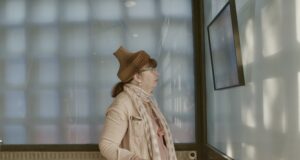
DOK Preview Germany: Berliner by Anna Khazaradze
In Anna Khazaradze’s Berliner, co-produced by German Heino Deckert, we meet Nana, a Georgian immigrant who has lived in Berlin for thirty years, and who translates for newly arrived migrants while navigating her own memories of displacement. “The film’s strongest foundation is the trust I have built with Nana over more than six years,” Khazaradze tells BDE. “The film connects directly with Georgian and German audiences, while its themes of migration, belonging and care are very universal themes.”
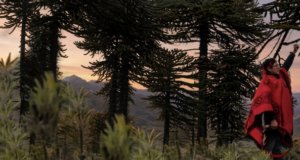
Chilean doccers head for DOK Leipzig 2026
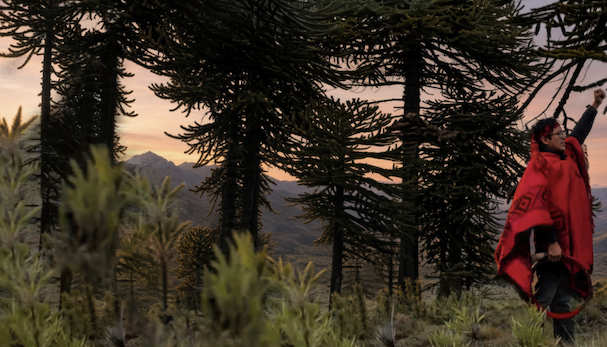
Two projects, Folil, A Journey to the Roots by Loreto Plubins, and Snails, directed by Max Kerkhoff, have been selected for the DOK Co-Pro Market. Chile will also be very much present in the DOK Leipzig retrospective ‘Kino und Kampf: Latin America between East and West,’ featuring films related to Chile’s political and cinematic history. “The fact that a Latin American retrospective now includes major historical films from Chile shows how highly our cinema is valued, both in Germany and by the festival itself,” comments Diego Pino Anguita, Deputy Director of Chiledoc.

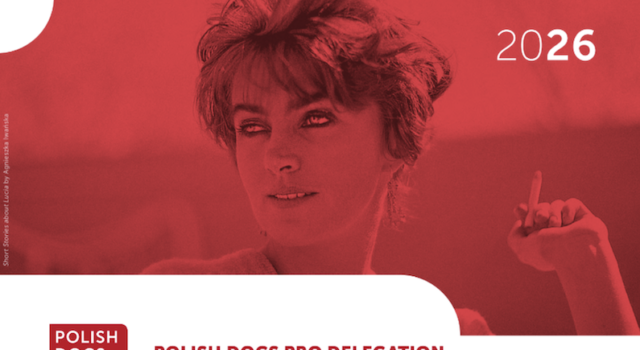
DOK Leipzig 26: Polish doc delegation lands in Leipzig
Five Polish producers will be representing six projects during DOK Industry as part of the Delegation Mix&Mingle/Round Table meetings. In addition, the project The Gap by Paweł Ferdek, will take part in co-pro meetings as part of the DOK Co-Pro Market. Additionally, eight films, five of which are docs, are selected for the festival, including three in International Doc Film Comp: Blossoming by Kamila Serwicka; I’m Painting a Self-Portrait, but All I See Is My Sister’s Face by Helena Stańczyk; and Letters from the Silenced Country by Andrei Kutsila.
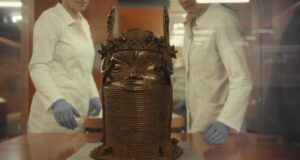
DOK Preview Germany: Matter and Spirits by Simone Unger
One of the completed projects presented at DOK Industry in 2026 is Simone Unger’s debut feature doc Matter and Spirits, selected for DOK Preview Germany and which focusses on three precious objects in a Leipzig museum, giving them voice and tracing their histories back through a colonial past. “The film helps to understand why it is necessary to continue the debate about the colonial heritage and the question of restitution,” says German producer Alexander Tanz of Lumalenscape.

DOK Preview Germany WiP: Praise the Sand by Annina...
In her highly personal feature documentary, director Annina Lehmann explores the rural landscape of her childhood in Brandenburg, asking people about their fears and longings. Between ethnographic study and a search for home, the film encounters ghost stories, village parties, feelings of loss and craving for connection. “The film grows out of a specific place, and from Annina’s own childhood there,” producer Margarita Amineva-Jester tells BDE ahead of the Oct 26 presentation of the project in Leipzig, “but the emotional and political forces it explores are visible across Europe, the United States and much of the world.”

DOK Preview Germany WiP: Eastkids by Julius Gintaras Blum
“Eastkids explores the long-term consequences of reunification through the lives of people who experienced it directly, and a younger generation who inherited its consequences without experiencing it themselves,” German producer Leon Harms tells BDE of Julius Gintaras Blum’s feature doc project, selected for Leipzig’s October 26 pitch event. The doc centres on the city of Chemnitz, once the heartbeat of East German industrialism but which has all but lost its identity post-reunification.

REVIEWS
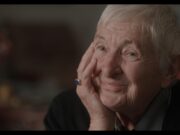
DOK Leipzig 2026 Opening Film review: Guten Abend, du Schöne by Ina Borrmann
In DOK Leipzig’s opening film, director Ina Borrmann films women who were interviewed anonymously for Maxie Wander’s 1977 GDR bestselling book ‘Guten Morgen, du Schöne.’ Half a century later, they continue their groundbreaking conversation about relationships and sexuality, discussing what has changed – and what hasn’t…

Ji.hlava 2026 Opus Bonum Int’l Comp review: Good Girls by Ania Winiarska
Who are the ‘good girls’? Those who conform to the strict rules of a Polish reformatory, or those who fight the system until they are eighteen and allowed to leave? Ania Winiarska’s documentary (world-premiering in Ji.hlava’s Opus Bonum competition) doesn’t judge or analyse, but remains steadfastly on the side of the girls within this suffocating correctional facility.

Ji.hlava First Lights/Czech Joy Comp review: Up Again by Eliška Cílková Andršová
An absorbing and compassionate portrait of resilience, determination and skill, Eliška Cílková Andršová’s Up Again (Znovu vstaň) celebrates the ‘never give up’ spirit of young figure skater Barbora Vránková as she attempts to transition from young Czech skating star to making it in the big leagues of world championships. The film is selected for the festival’s Czech Joy competition.

Venice FF review: Burgundy by Michael Dweck, Gregory Kershaw
While the famously fine red wines and vineyards of Burgundy provide both the context and the setting for this beautifully made film, co-directors Michael Dweck and Gregory Kershaw astutely deploy their vérité gaze to dwell on love in all its forms, both within and beyond the vines, focussing on the estates, their wealthy owners, as well as the workers and critics whose lives are so deeply invested within the region’s fabled reds.

POPULAR POSTS