




Berlin Panorama: Douglas Gordon By Douglas Gordon by Finlay Pretsell
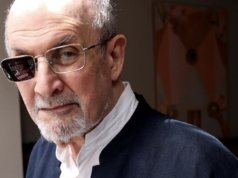
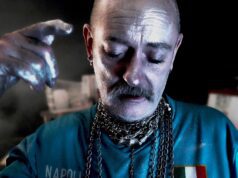
Finlay Pretsell’s documentary on the great Scottish artist, sold by Autlook and produced by Sonja Henrici and Pretsell himself, is as close as you can come to watching a major talent in full flow. “I was fascinated by what makes a great artist tick, I suppose,” the director tells BDE. “He’s almost in some sort of trance, making this work. This would take hours. We would often spend 12 to 15 hours [a day] in the studio.”

Berlin Panorama: Traces by Alisa Kovalenko, Marysia Nikitiuk
Traces, selected for Berlin’s Panorama section, addresses head-on the collective trauma suffered by survivors of conflict-related sexual violence (CRSV), as perpetrated by the Russian military on Ukrainian women and men since 2014. More so, the film is about the refusal to remain silent, and centres on Iryna Dovhan, head of SEMA Ukraine, who documents the testimonies of survivors. “You see these women, you see their faces. They're not covered. They're not blurred. They're ready to talk. They're ready to sacrifice their privacy for the sake of truth,” co-director Kovalenko tells BDE.

Berlinale Panorama: Tristan Forever by Tobias Nölle and Loran Bonnardot
Tristan da Cunha may be the most remote inhabited island on the planet, but it is nevertheless the place where Loran Bonnardot, a piano-playing doctor from Paris, is determined to settle. His existentialist journey, part-fictionalised, is chronicled by Swiss director Tobias Nölle. “I saw in Loran a castaway from our hyper-competitive society, seeking an authenticity we’ve lost, on an island secluded from our war-torn world; a dream I wanted to transform into a cinematic experience,” he says.
Berlin Special: A Child of My Own by Maite Alberdi
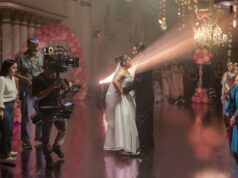
In her new feature doc, a deep longing for motherhood, intensified by relentless pressure from those around her, compels a woman (Alejandra) to stage a false pregnancy, which leads to her eventual exposure and incarceration. “I always think reality is stranger than fiction,” Alberdi tells BDE. “I thought the events were extraordinary but, at the same time, quickly I connected with the questions about the depression of motherhood.”

Berlinale Generation Kplus: The Fabulous Time Machine by Eliza Capai
The first documentary ever to open Berlinale’s Generation Kplus section, Brazilian Eliza Capai’s delightful feature engages the talents of a group of young girls to examine the business of…well, being young girls. As well as some other big topics, such as death and religion and their future lives. “I felt it was really powerful, because when we laugh about these topics in this crazy world, we are able to think about these topics,” Capai tells BDE of her experience with the girls. “We were able to create empathy.”
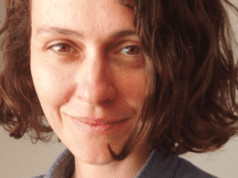
Berlinale 2026: Isa Willinger, Face To Face with German Films
Business Doc Europe interviews Isa Willinger, one of seven German film talents selected for German Films’ Face to Face showcase of February 16. In her recent feature doc No Mercy (2025), sold by Cinephil, Willinger interviewed a series of other female filmmakers who inspire her today. “Film is really a more popular medium,” says the former academic. “For me, it was always important to communicate with an audience - and not just a super tiny niche audience.”

Berlin Panorama: Two Mountains Weighing Down My Chest by Viv Li
Stuck in Berlin after the pandemic, artist and filmmaker Viv Li, who comes from solid, traditional stock back in Beijing, decided to embrace the German capital’s ‘alternative’ culture scene. Her resulting (mis)adventures are as hilarious as they are poignant, especially when seen in counterpoint to her sober, albeit loving, family life back home. “I realised that there is less and less of ‘binary’ in how we live. There are a lot of differences, but in the end, we're the same,” she suggests to Business Doc Europe.

Berlinale Forum Expanded: Uchronia by Fil Ieropoulos
Fil Ieropoulos’s hybrid feature Uchronia invokes the wild and restless spirit of Symbolist poet Arthur Rimbaud, as it offers up a latter-day critique of identity, revolution and the role of the artistic avant-garde. It is a film of glorious excess, characterised by a wanton curiosity and a vagabond unrest of style. “Major film festivals are increasingly risk averse these days, much more than they were in the 80s and 90s, the director says. “That said, we are very happy to be at Forum Expanded, the most daring section of the whole of the Berlinale.”

Berlin interview: DocSalon’s Esther Bannenberg, Tanja Meissner, Head of Berlinale Pro
Esther Bannenberg oversees her second edition as chief of DocSalon, which kicks off February 13, running through to Feb 17. “What excites me most is bringing in the networking dynamics at DocSalon and the Archive Market,” she tells BDE, “to make sure that we facilitate business opportunities as well as strengthen the ties between creatives and industry execs [and] an open informal exchange on all levels, while serving the documentary eco systems to explore which innovations can help to overcome challenges and create new opportunities.” Bannenberg is joined in conversation by Tanja Meissner, Head of Berlinale Pro.

Berlin Forum: Flying Tigers by Madhusree Dutta
Indian filmmaker Madhusree Dutta could not understand why her mother, who died of Alzheimer’s in 2015, would talk so much about tigers, even though she had never mentioned seeing one before her illness. But after hearing the story of the eponymous US Flying Tiger planes that were operational in the Himalayas during WW2, things began to fall into place for Dutta, at which point she was inspired to embark on a genre-defying study of memory, war and infrastructure. Dutta discusses her new film with BDE.





